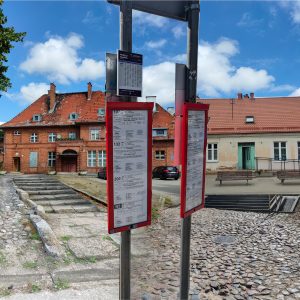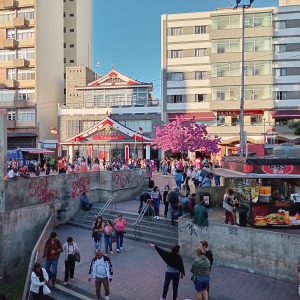
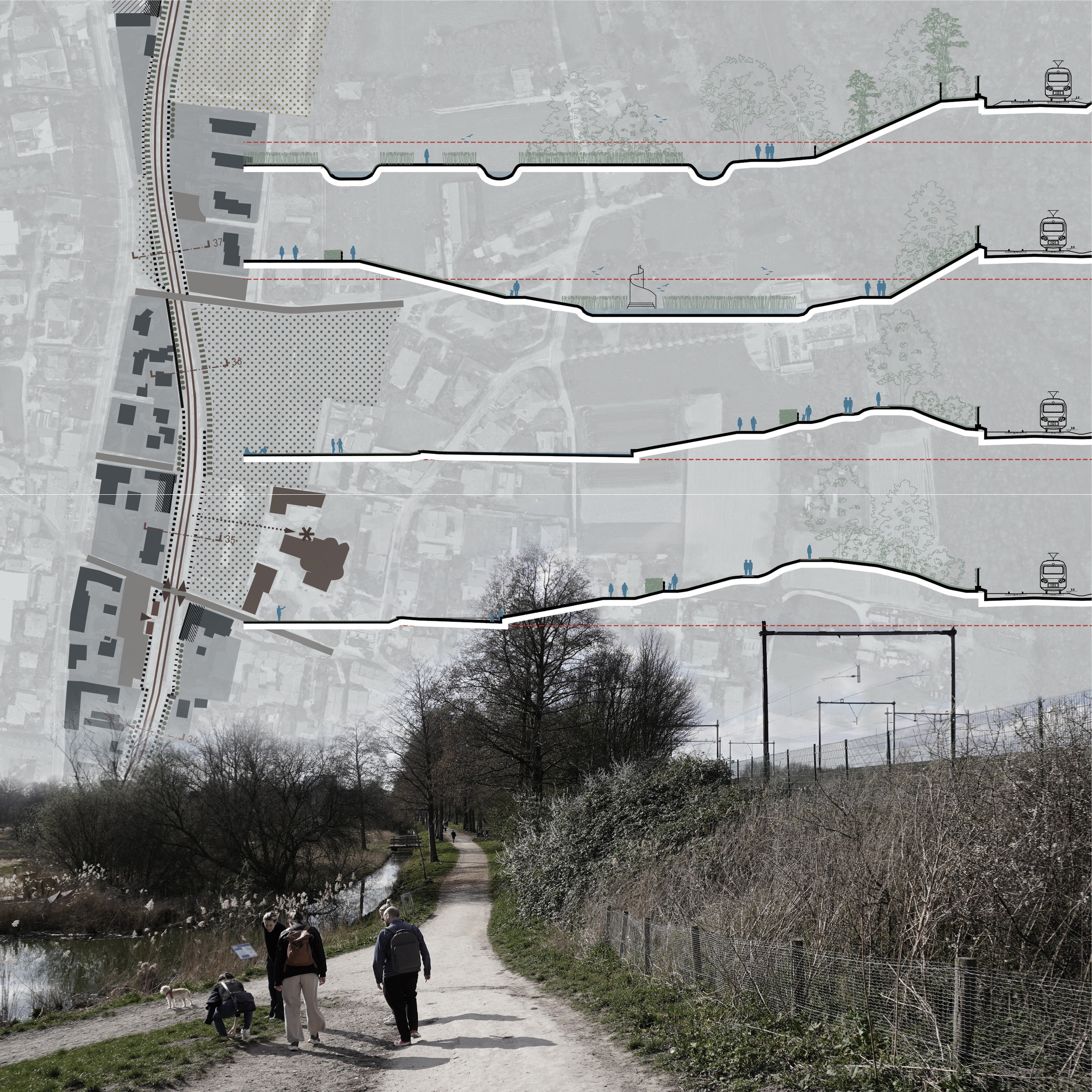
Interface between the infrastructure and the territories it crosses, the railway edge is a physical border that assumes a role in their architectural and spatial definition. Its longitudinal dimension constantly unfolds into a transversal relationship, shaping the space of interaction between the railway and the landscapes it passes through. The point-to-point relationship of the line and the fabrics it intersects remains critical today: whether concerning existing lines and their modification, infrastructural insertion seems to be addressed only from an engineering perspective, through a mainly economic and functional approach. With its exclusionary character, the edge is thus reduced to a two-dimensional artefact of separation dictated by safety issues.
What kind of relationship does the railway edge establish with the territories it encounters? How can an architectural approach contribute to the rewriting of the critical relationship between the railroad and the territory, becoming an opportunity for urban regeneration?
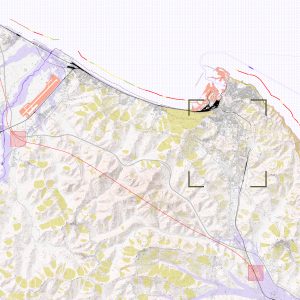
The research is framed within the context of an Italian PNRR (Recovery and Resilience National Plan) PhD scholarship, co-funded by FNM Group – an integrated Group for sustainable mobility in Lombardy. Through the analysis of the local case study of the Ferrovienord rail network, this contribution explores the railway edge both as an artefact and a space available to the project, reconsidering it in its three-dimensional extension, including marginal areas and liminal spaces. By comparing selected European best practices, it investigates how the architectural project can attribute to the railway border an urban, connective and environmental role. This linear element seeks a transversal variable-depth that transforms it into an ‘extended edge’, the liminal place of mediation, a place to inhabit, an opportunity for regeneration that gives a new quality to the infrastructure border, rewriting its relationship with the consolidated crossed fabrics.
Bibliography
- Stoll, K., & Scott L. (eds.) (2010). Infrastructure as architecture. Designing composite networks. Jovis Verlag GmbH.
- Valentini, A., & Ventura, P. (eds.) (2008). Il paesaggio e le infrastrutture. La Rosa Editrice.
- Vallerini, L. (ed.) (2009). Il paesaggio attraversato. Inserimento paesaggistico delle grandi infrastrutture lineari. Edifir-Edizioni Firenze.